How Do You Know if a Pickle Is Fermented
Is Pickling the Same as Fermenting?
Pickling and fermenting are two types of preserving methods that bring out fifty-fifty the most subtle of flavors in food. Bright, sour, and full of tang, pickled and fermented foods are sometimes thought of as 1 and the same. While they overlap in some areas, pickled and fermented foods are made a fleck differently. Below we break down pickling vs fermenting and do a deep dive into each preserving method.
Pickling vs Fermenting
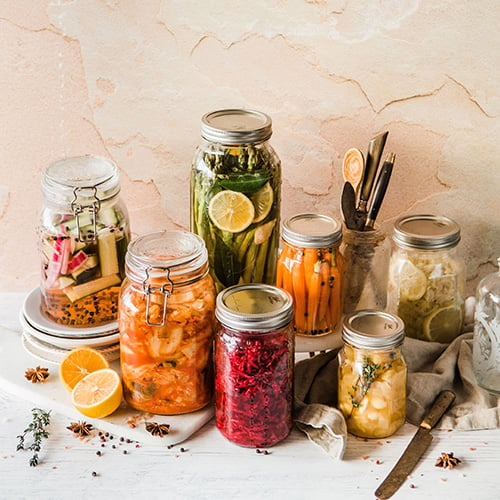
The deviation between pickling and fermenting is the process of how they achieve a sour flavour. Pickled foods are sour because they are soaked in acidic brine, while fermented foods are sour because of a chemic reaction between naturally present sugars and bacteria. Even so, there is a departure between quick pickles and lacto-fermented pickles—more on that beneath. Both fermenting and pickling tin can exist done in canning or mason jars.
Shop All Canning Jars and Supplies
What is Pickling?
Pickling is the method of preserving foods in acidic liquid. The basic ingredients of quick pickling are water, vinegar, pickling common salt, and optional pickling spices or aromatics (fresh herbs, citrus rinds, and garlic) to give your pickled foods more flavour. If you're using the Lactic Acid Fermentation method, then your brine should not have an acid in it and should only be water, salt, and any other additional flavorings y'all'd similar.
Pickled Foods
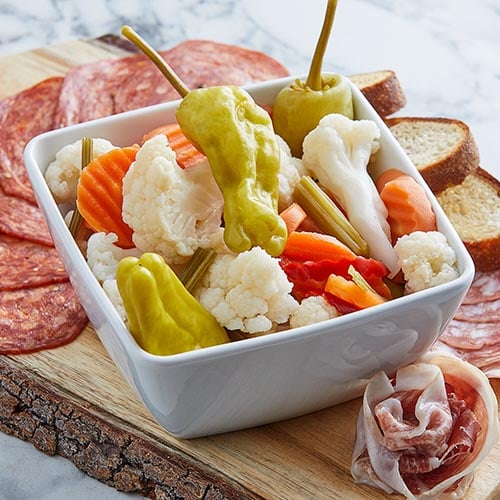
Because pickling is such a delicious style to eat food, there have been many different types of nutrient that have undergone the pickling process. Below are a few foods that tin be pickled:
- Vegetables - The most common food to pickle is vegetables. You tin can pickle almost whatsoever vegetable, but it's best to go for something with a firm texture, like cucumbers, beets, carrots, cauliflower, scallions, and onions. The pickling time depends on how big the vegetable is, so keep that in listen when considering your fourth dimension. Vegetables that you should stay away from for pickling are leafy greens like spinach and kale. Y'all can also make the classic giardiniera, which is a mix of pickled vegetables like red chilis, carrots, celery, and cauliflower. Giardiniera is most commonly used in Chicago on Italian beef sandwiches or a New Orleans muffuletta.
- Fruits - Using pickled fruit is a peachy fashion to add a sour and sweetness element to a dish. Mangoes, strawberries, cherries, plums, peaches, pears, apples, and grapes are slap-up fruits to pickle with because of their firm structure. The acidic brine helps suspension down the strong construction so the fruit becomes a bit softer with an added brightness from the brine. Add in aromatics similar mint and citrus rinds for complementing flavors to the sweet fruits. You lot tin can also pickle dissimilar types of tropical fruit to make your delicacies last longer.
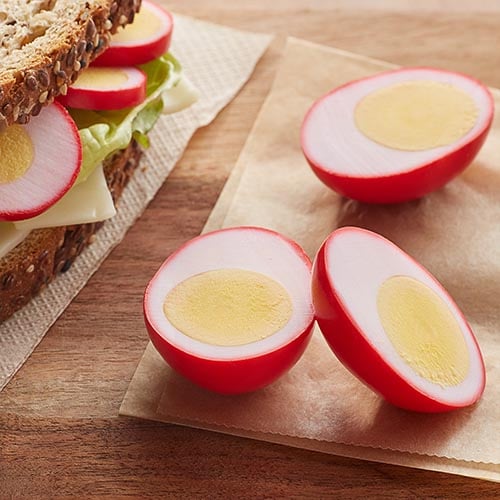
- Eggs - The practice of pickling eggs is very popular in certain areas of the globe. Hard-boiled eggs are placed into a glass jar and topped with a pickling liquid, herbs, and garlic. Another popular pickled egg add-in is beet juice, which gives the eggs a vibrant pinkish-purple color and tangy beet season.
- Meat - Pickling meat is an excellent manner to preserve specialty meats and lend a new, distinct flavour. Ideal meats to pickle are sausages, knockwursts, bologna, kielbasa, beef, and ham.
- Fish - Pickled fish is a delicacy in countries with cold climates. The nearly popular pickled fish is pickled herring, and other practical fish options to use for pickling are perch, walleye, and other firm white fish.
Store All Pickled Vegetables
What Is Pickling Salt?
Pickling common salt is a finely ground salt with zero additives. Pickling common salt is also known as canning salt or preserving common salt. It's made of pure sodium chloride and does not incorporate the iodine and anticaking agents that are traditionally added to table salt.
What Is Fermentation?
Fermentation is the process of chemically breaking down living organisms found in carbohydrates and glucose (such equally starch or sugar) into alcohol or acids. Fermentation requires an anaerobic process, which means piffling to no oxygen is present when fermenting food. The result of fermenting is creating a desirable change in the food's structure, season, and producing tons of salubrious probiotics.
Three Types of Fermentation
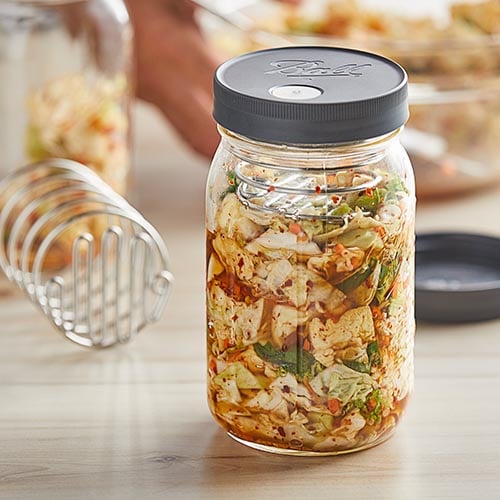
Below are the 3 different types of fermentation that your foods can undergo:
- Lactic Acid Fermentation - This mode of fermentation uses lactic acid-producing bacteria to interruption down and ferment the food. It only requires water, table salt, and the naturally occurring sugars plant in the nutrient to change the starches and sugars into acid. The lactic acid fermentation method is used to create kimchi, sauerkraut, yogurt, and pickles (as long as vinegar is not added).
- Alcoholic Fermentation - This method of fermentation starts with grains and sugars that are broken downwardly by yeast or bacteria, creating carbon dioxide and alcohol molecules. The yeast can either be the naturally occurring yeast that's found on fruit'due south skin or in cellars, or a cultivated yeast can be used to get the fermentation process going immediately. The alcoholic fermentation method is used to create beer, vino, cider, mead, and sake.
- Acetic Acid Fermentation - This blazon of fermentation is likewise known equally natural fermentation, and usually requires a SCOBY (symbiotic combination of bacteria and yeast) or other starter civilization made up of living organisms. The acetic acid fermentation method is used to create kombucha, sourdough, kefir, ginger beer, apple cider vinegar, and red or white vino vinegar.
Types of Fermented Foods
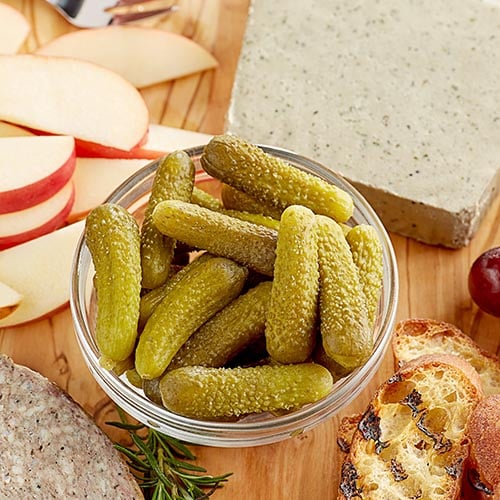
Since the method of fermentation is so versatile, many different types of fermented foods take been created over time:
- Sourdough - a bread that'south leavened from bacteria and naturally occurring yeast
- Kefir - a fermented milk drink that'southward ofttimes characterized every bit thin yogurt
- Kimchi - a staple side dish in Korean cuisine that'due south made up of fermented vegetables with a variety of seasonings
- Sauerkraut - shredded and fermented cabbage
- Yogurt - a fermented milk production that combines milk with yogurt cultures to produce a thick, custard-similar product
- Lacto-Fermented Pickles - vegetables that have been submerged in a brine of water and common salt and left at room temperature for a long period of time
- Vinegar - an acidic liquid that'due south used every bit a additive or flavor enhancer and made past fermenting fruit or wine
- Tempeh - a traditional Indonesian protein base that'south made from fermented soybeans bound into a block-like form
- Miso - a staple ingredient in Japan that's made from fermented soybeans that are ground into a paste
Shop All Fermented Foods
Types of Fermented Drinks

Food isn't the only thing that can exist fermented! Fermentation extends to drinks likewise, and with and then many types of fermented drinks, you lot may be surprised to run across your favorite beverage on the list:
- Ginger Beer - a non-alcoholic, bubbly drink that's made from fermented ginger, yeast, and sugar
- Wine - an alcoholic beverage that's traditionally made from fermented grapes
- Beer - an alcoholic drink that's made from yeast, hops, malt, and other cereal grains
- Kombucha - a fizzy beverage made from tea, yeast, sugar, and leaner
- Cider - an alcoholic drink made from apples
- Mead - an alcoholic drink made from dear, h2o, and yeast
- Sake - an alcoholic beverage made from bran-removed rice
Fermentation FAQ'south:
Below we've cleared up confusing and frequently asked questions about fermentation:
Are Pickles Fermented?
Quick pickles are not fermented, but lacto-fermented pickles are fermented. Quick pickles, the most common type of pickle constitute in grocery stores, are non fermented because they utilise an acid, such as vinegar, in their pickling brine. However, lacto-fermented pickles are fermented because they follow the lactic acid fermentation method, which only uses water and salt in their brine.
Is Vinegar Fermented?
Yes, vinegar is fermented! Vinegar uses two fermentation processes: alcoholic fermentation and acetic acid fermentation. To start the procedure of fermenting vinegar, the yeast will consume the natural sugars. This process will excrete alcohol, causing alcoholic fermentation. Next, oxygen is fed to the booze, which causes leaner to grow and produces acrid, undergoing the acerb acrid fermentation process.
Now that yous know the difference betwixt fermenting vs pickling, you can create your own pickled and fermented foods in your restaurant's kitchen. In that location'due south no meliorate feeling than being able to write "housemade kimchi" or "jalapenos pickled in house" on your carte du jour to truly show your guests how much you lot care virtually the quality of your nutrient and how far yous and your staff'south passion for cooking extends.
Source: https://www.webstaurantstore.com/blog/3658/pickling-vs-fermenting.html
0 Response to "How Do You Know if a Pickle Is Fermented"
Post a Comment